Cabinets set the look of a kitchen more than anything else in the room, and they are usually the biggest line in a kitchen budget. So when a kitchen starts to feel tired, the cabinet question comes first: keep them and freshen them up, change the doors, or start over. The honest answer depends on what is going on behind the doors.
Start with the boxes, not the doors
Doors and finishes are easy to change. Boxes are not. When I walk a kitchen for an estimate, I open every door and drawer and check the parts that carry the load.
- The sink base. Look for swelling, stains or soft spots from old leaks. Particleboard that has been wet does not recover.
- Drawer boxes and slides. Drawers that sag, stick or have been glued back together point to tired hardware or tired boxes.
- Shelves and face frames. Shelves that bow under dishes and frames pulling away from the wall are structural problems, not cosmetic ones.
- The layout. If the kitchen fights you every day, with no landing space next to the range or a corner cabinet nobody can reach, new finishes will not fix it.
If the boxes are solid and the layout works, you have options. If they are not, the conversation changes.
Option 1: refresh what you have
Solid cabinets in a layout you like can often be brought back with paint or a professional refinish, new hinges and new hardware. It is the least disruptive option and it can change the feel of a kitchen quickly. The catch is that paint does not hide everything: dated door styles, peeling laminate and worn edges still read through.
Option 2: new doors and drawer fronts
Refacing keeps the existing boxes and replaces what you see: doors, drawer fronts and the exposed sides. It gives you a new style, shaker for example, without tearing the kitchen apart. It makes the most sense when the boxes are sound and you are happy with where everything is.
Option 3: replace the cabinets
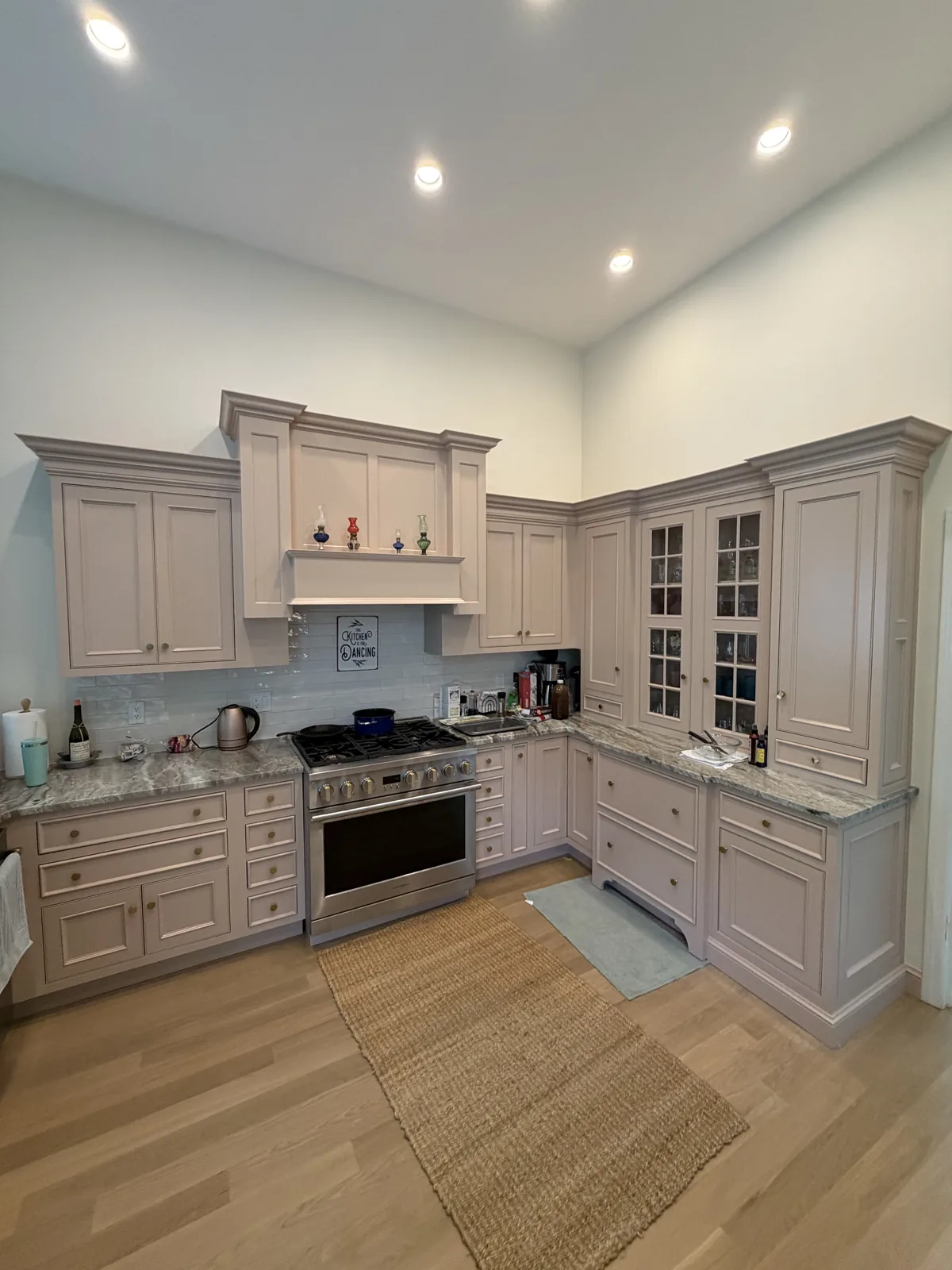
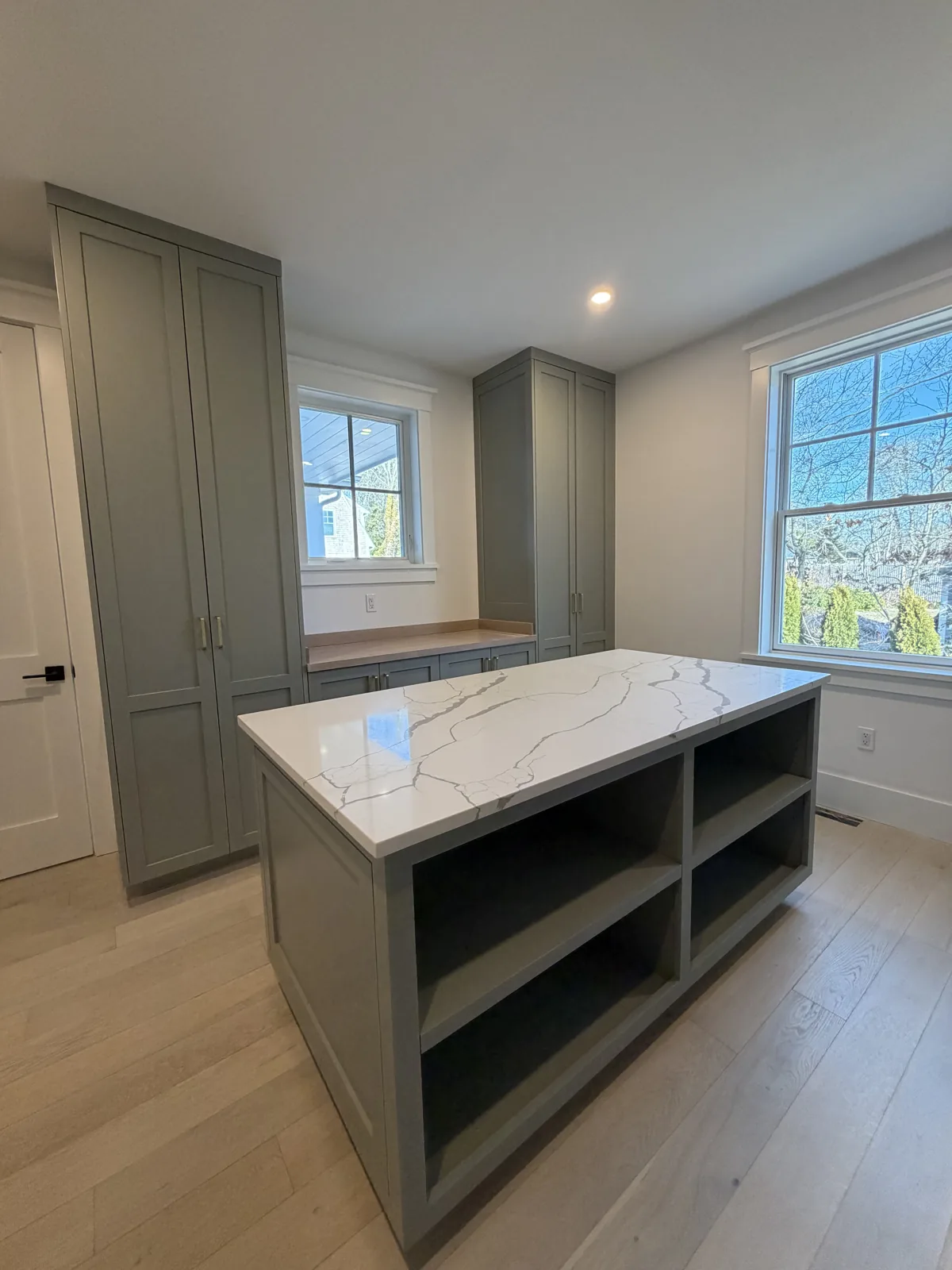
Replacement is the right call when the boxes are damaged, the layout needs to change, or you want things the old kitchen cannot do: a tall pantry, an island, deep drawers instead of base cabinets with shelves, or cabinetry that runs all the way to the ceiling. It usually means new countertops too, because tops are templated and cut to the cabinets under them.
What makes a cabinet installation look custom
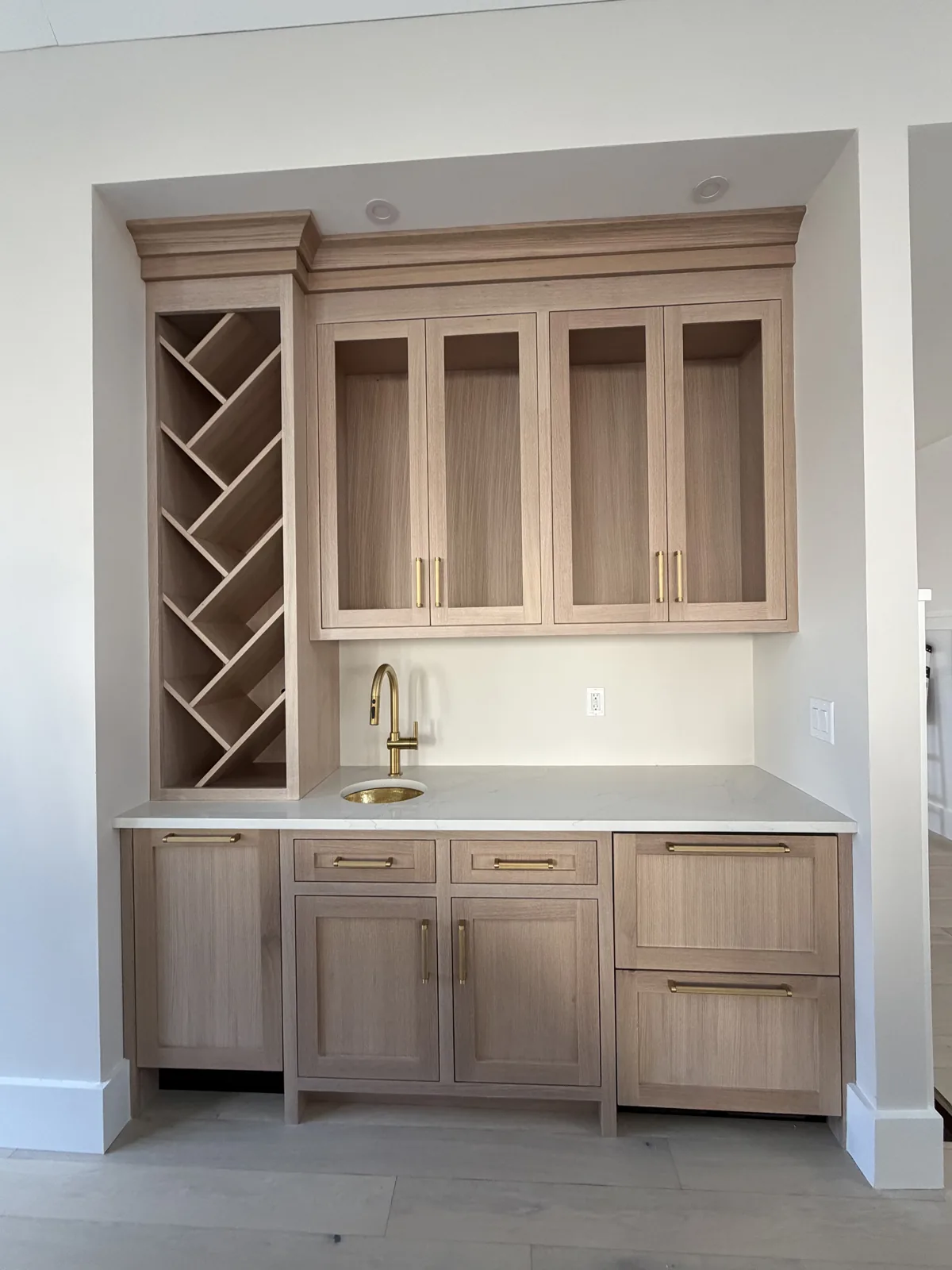
Two kitchens with the same cabinets can look completely different depending on how they were installed. These are the details we sweat, and the ones to look for in any kitchen you admire:
- Level and plumb from the first box. Every countertop seam and door gap depends on the first base cabinet being dead level, even when the floor is not.
- Scribed fillers and panels. Older walls are rarely straight, so fillers and end panels get scribed to the wall instead of leaving a gap or a thick bead of caulk.
- Even reveals. The gaps between doors and drawers should match across the whole kitchen.
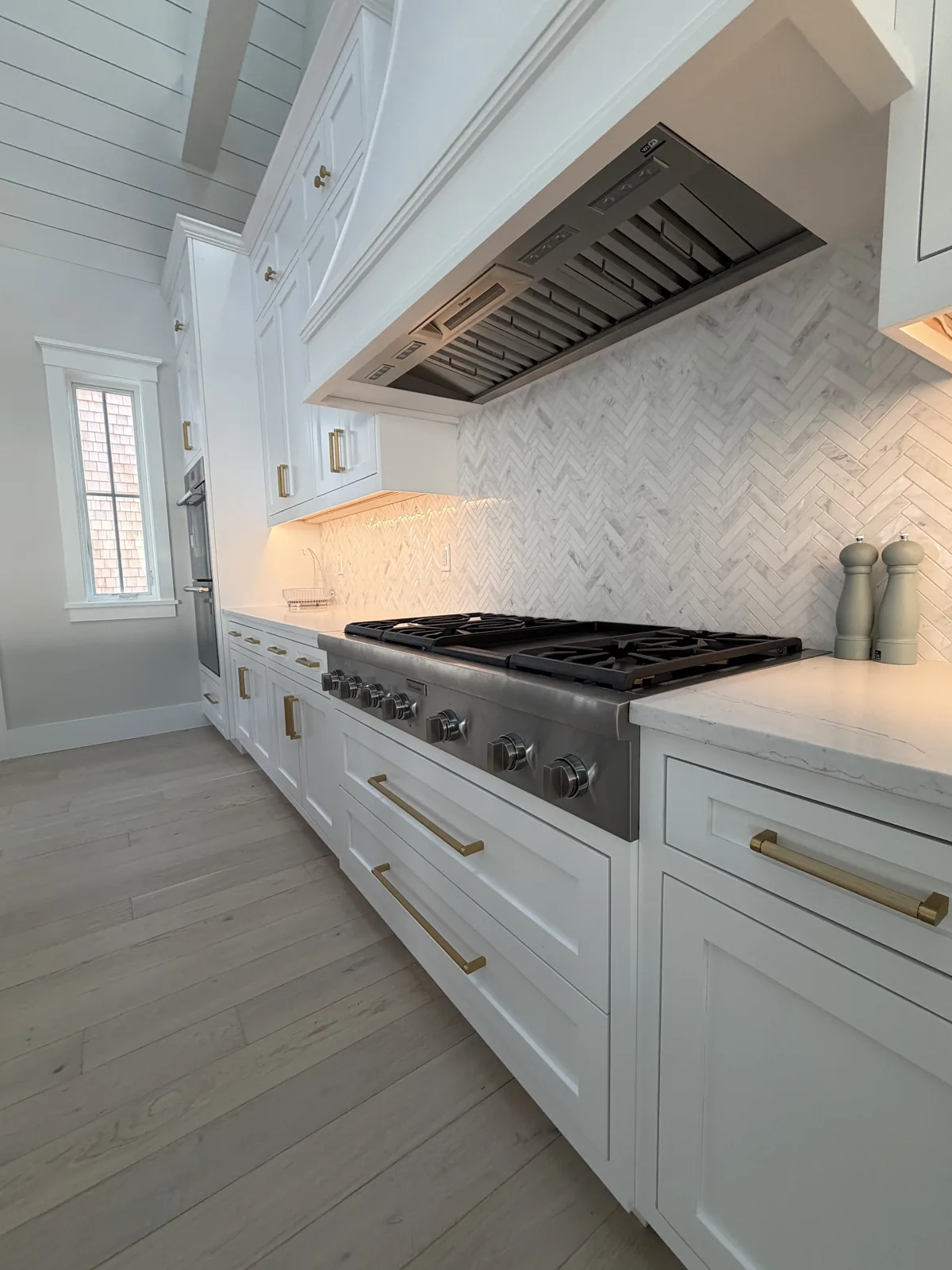
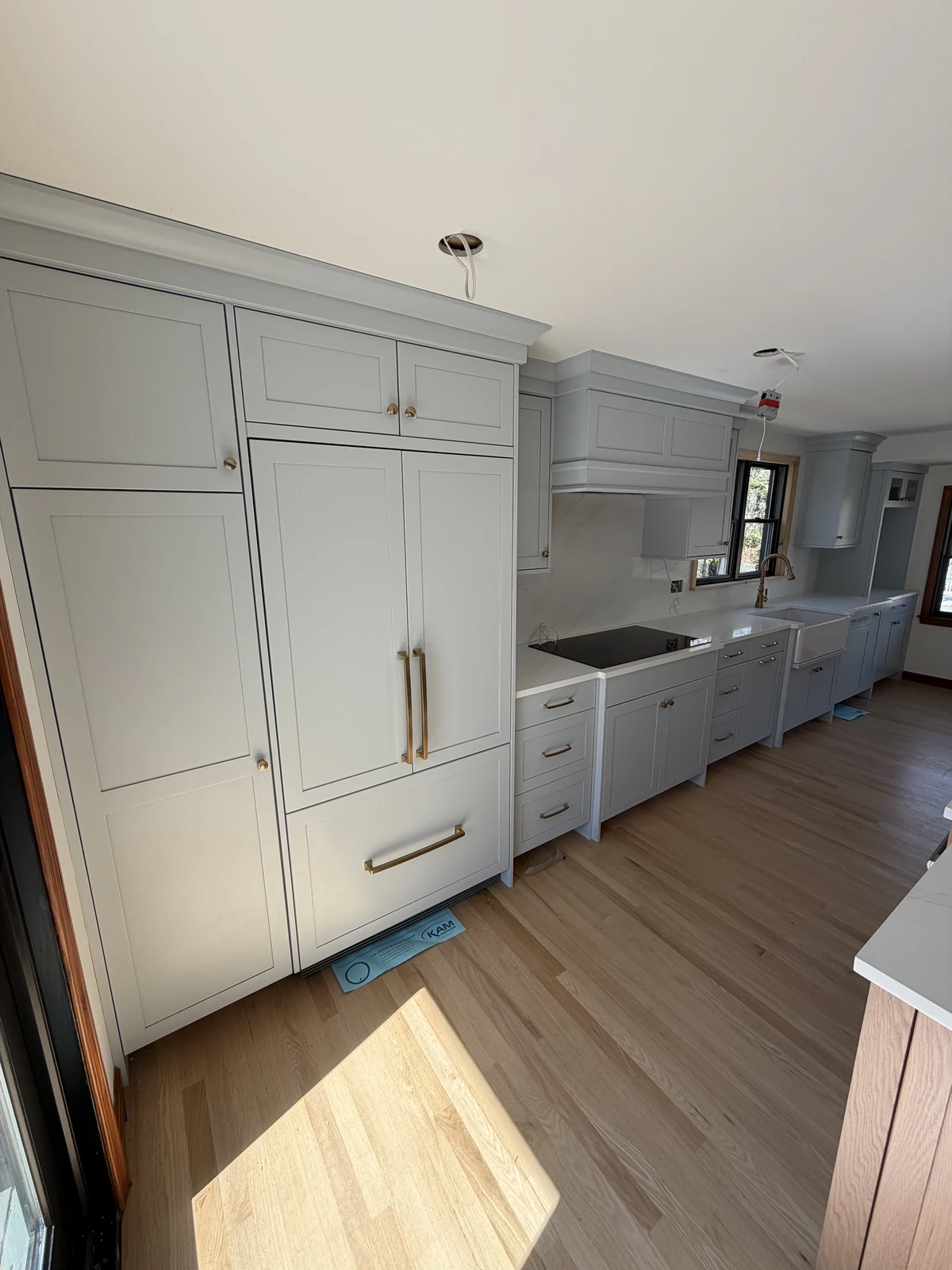
- Crown and light rail. Running cabinets to the ceiling with crown makes a kitchen look built in, and light rail hides the under-cabinet lights.
- Hardware set with a template, so every knob and pull lines up from one end of the room to the other.
- Panel fronts on the refrigerator and dishwasher when you want the appliances to disappear.
A quick way to decide
- If the boxes are solid and you like the layout, refresh or reface.
- If the boxes are damaged or the layout does not work, replace.
- If a full remodel is a few years away, put the cabinet money into the remodel instead of a temporary fix.
Cabinets are finish carpentry with doors and drawers, which is exactly our trade. If you want a second opinion on yours, take a look at our kitchen cabinet work and our full kitchen remodeling page, and we will tell you honestly which of the three options you are looking at.